A SLAP tear is an injury to the cartilage ring (labrum) that surrounds the shoulder socket. SLAP stands for Superior Labrum Anterior to Posterior, meaning the tear occurs in the upper part of the labrum where the biceps tendon attaches. A SLAP Tear can cause shoulder pain, instability, and difficulty with overhead movements.
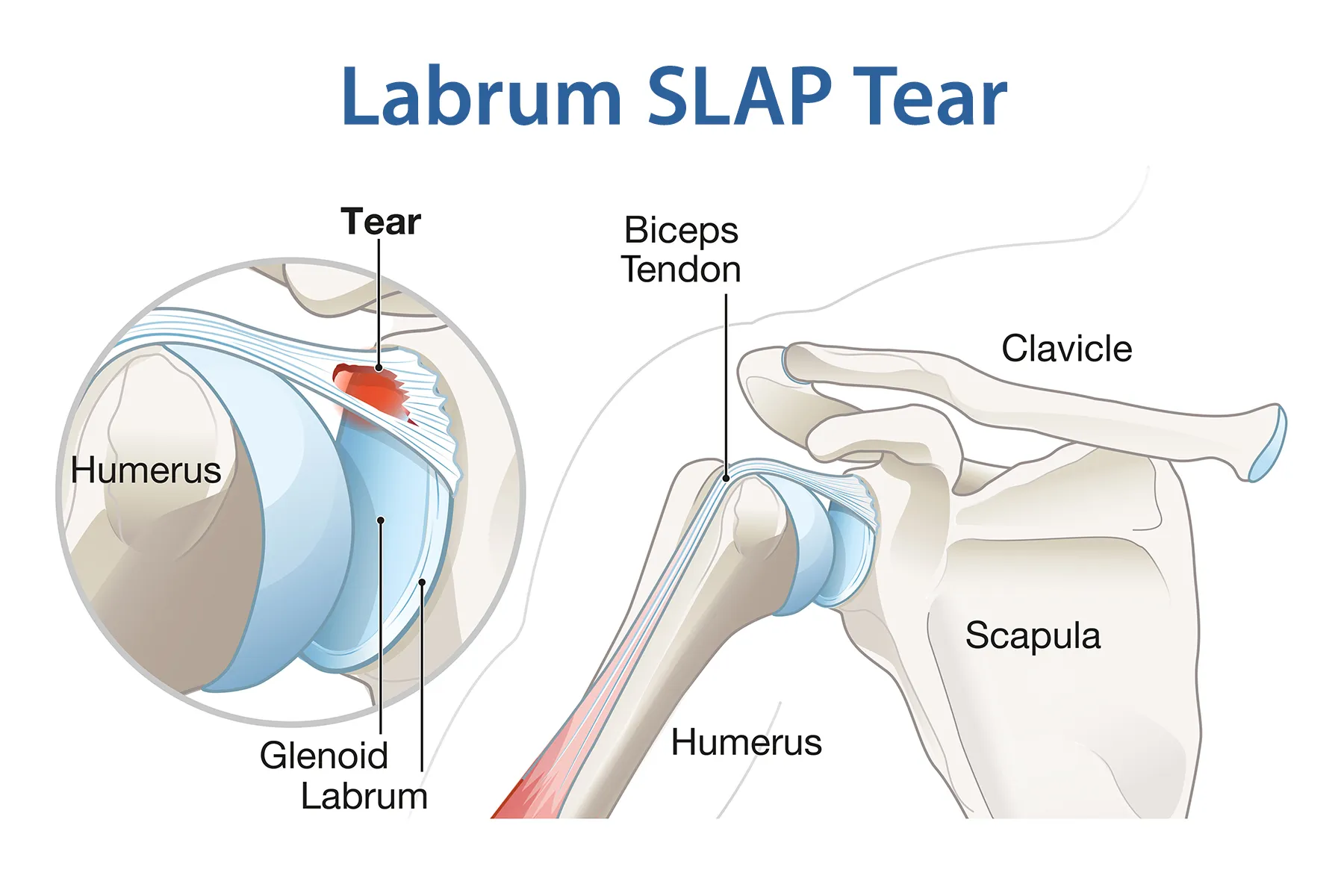
SLAP tears often occur due to sports injuries, repetitive overhead activities, or sudden trauma such as a fall on an outstretched arm. They are commonly seen in athletes involved in cricket, tennis, swimming, and weightlifting, where the shoulder is used repeatedly for throwing or lifting.
Common symptoms include deep shoulder pain, weakness, a catching or locking sensation in the shoulder, and difficulty lifting or rotating the arm. Pain may worsen during overhead activities, throwing, or lifting heavy objects.
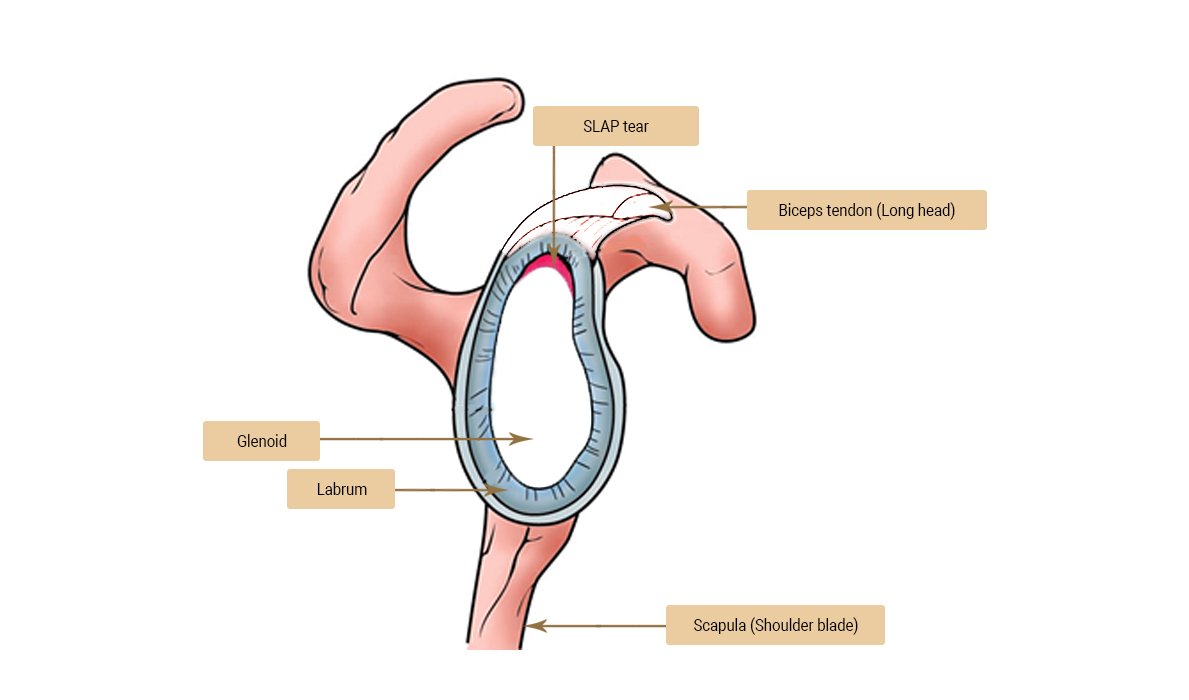
Diagnosis is made through a clinical examination by an orthopedic specialist and imaging tests such as MRI or MR arthrogram. These tests help confirm the presence and severity of the labral tear.
Treatment depends on the severity of the injury and the patient's activity level. Mild cases may improve with rest, physiotherapy, and strengthening exercises for the shoulder muscles. More severe or persistent tears may require arthroscopic SLAP repair surgery to restore shoulder stability and function.
Recovery usually involves a period of rest followed by structured physiotherapy to regain shoulder strength and flexibility. Most patients gradually return to normal activities and sports after proper rehabilitation.
SLAP stands for Superior Labrum Anterior to Posterior, referring to a tear in the upper part of the shoulder labrum where the biceps tendon attaches.
Mild tears may respond to physiotherapy and rest, while more severe tears typically require arthroscopic SLAP repair surgery to reattach the torn labrum.
Yes, most athletes can return to throwing sports after 4 to 6 months of rehabilitation, once shoulder strength and range of motion are fully restored.
Common signs include deep shoulder pain, clicking or catching sensations, and pain during overhead activities. An MRI or MR arthrogram confirms the diagnosis.
Dr. Sahil Lala provides personalized treatment plans for every patient. Book your appointment today.
Get expert opinion from Dr. Sahil Lala. Click below to share your reports instantly.
Send on WhatsApp