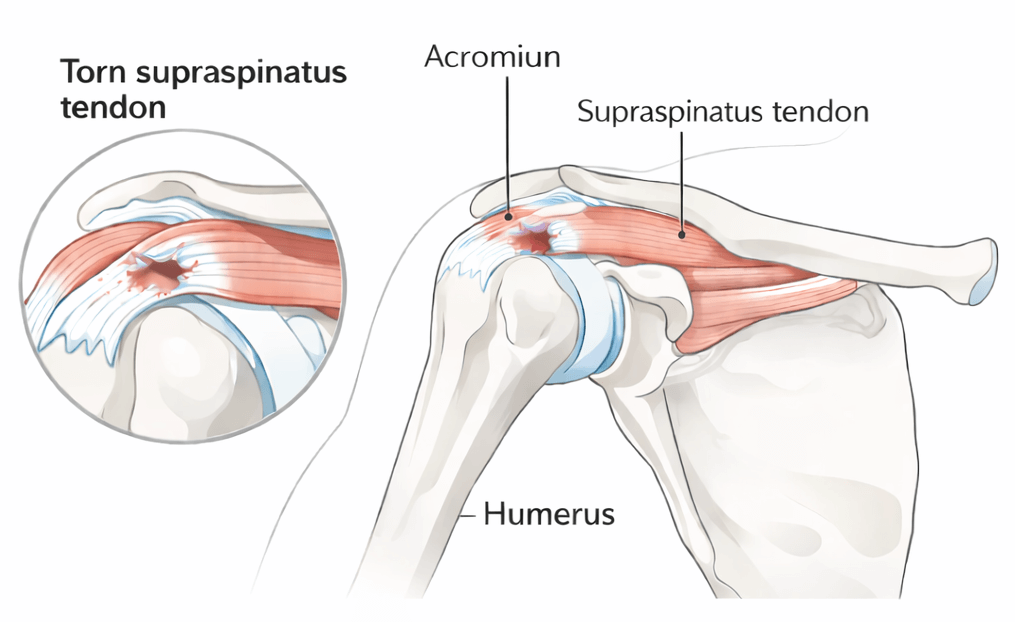
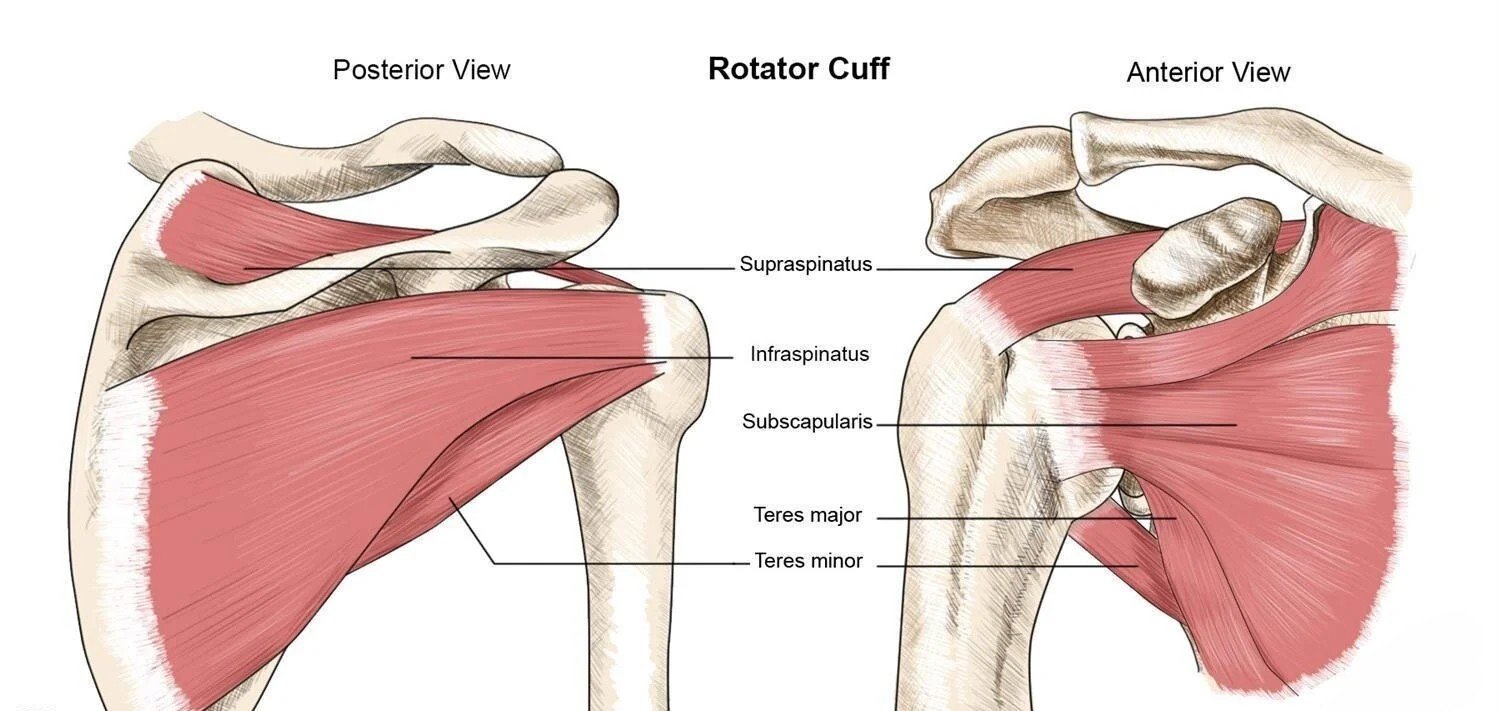
A rotator cuff tear occurs when one or more of the tendons that stabilize the shoulder joint become torn or damaged. The rotator cuff is a group of muscles and tendons that help lift and rotate the arm. A Rotator Cuff Tear can lead to shoulder pain, weakness, and difficulty performing daily activities such as lifting the arm.
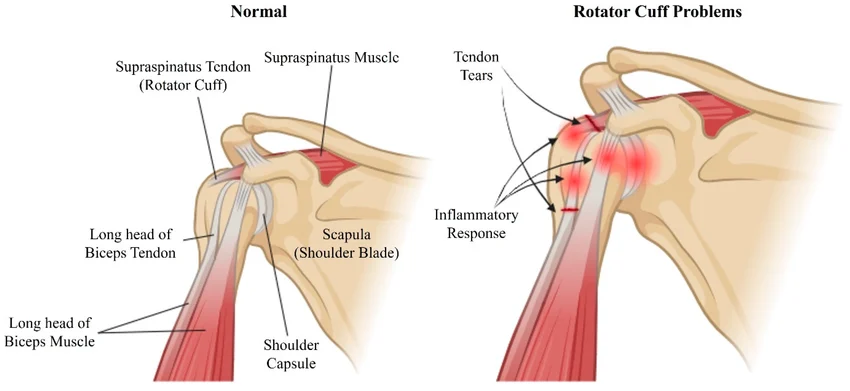
Rotator cuff tears may occur due to sudden injury, falls, lifting heavy objects, or sports activities. They can also develop gradually due to age-related wear and tear, especially in people who frequently use their shoulders for overhead movements.
Common symptoms include shoulder pain, weakness while lifting the arm, difficulty reaching overhead, and pain during sleep, especially when lying on the affected shoulder. Some patients may also notice reduced shoulder movement and stiffness.
Diagnosis is made through clinical examination by an orthopedic specialist and imaging tests such as ultrasound or MRI scans. These tests help confirm the presence and severity of the tendon tear.
Treatment depends on the severity of the tear and the patient's activity level. Mild cases may improve with rest, medications, physiotherapy, and shoulder strengthening exercises. Larger or persistent tears may require arthroscopic rotator cuff repair surgery to restore shoulder function.
Recovery usually involves immobilization of the shoulder for a few weeks followed by a structured physiotherapy program. Rehabilitation helps restore shoulder strength, flexibility, and normal movement. Most patients gradually return to normal activities within 3–6 months.
Small or partial tears may improve with rest, physiotherapy, and anti-inflammatory treatment, but large or complete tears often require surgical repair.
Recovery typically involves 4 to 6 weeks of shoulder immobilization followed by 3 to 6 months of physiotherapy to regain full strength and movement.
Rotator cuff tears can result from acute injuries like falls or heavy lifting, or from gradual wear and tear due to aging and repetitive overhead activities.
Yes, most patients regain good shoulder function and the ability to lift their arm normally after completing their rehabilitation program.
Yes, most rotator cuff repairs are performed arthroscopically through small incisions, allowing faster recovery and less post-operative pain.
Dr. Sahil Lala provides personalized treatment plans for every patient. Book your appointment today.
Get expert opinion from Dr. Sahil Lala. Click below to share your reports instantly.
Send on WhatsApp